Baxi provides sustainable heat pump solution for Norwich City Council’s iconic Eaton Park Pavilion
A tailored Baxi air source heat pump solution is providing low carbon heating and hot water at Eaton Park Pavilion, the iconic Grade II-listed pavilion at the heart of one of Norwich City Council’s most beautiful parks.
At just under one hundred years of age, the historic Grade II-listed Eaton Park Pavilion has recently undergone an extensive refurbishment project to provide upgraded modern Football Association (FA) compliant sports changing facilities, including new individual showering cubicles, toilets and officials’ rooms. The improvements ensure the Pavilion meets the highest standards of inclusivity with the aim to boost woman’s and girls’ sports within the park.
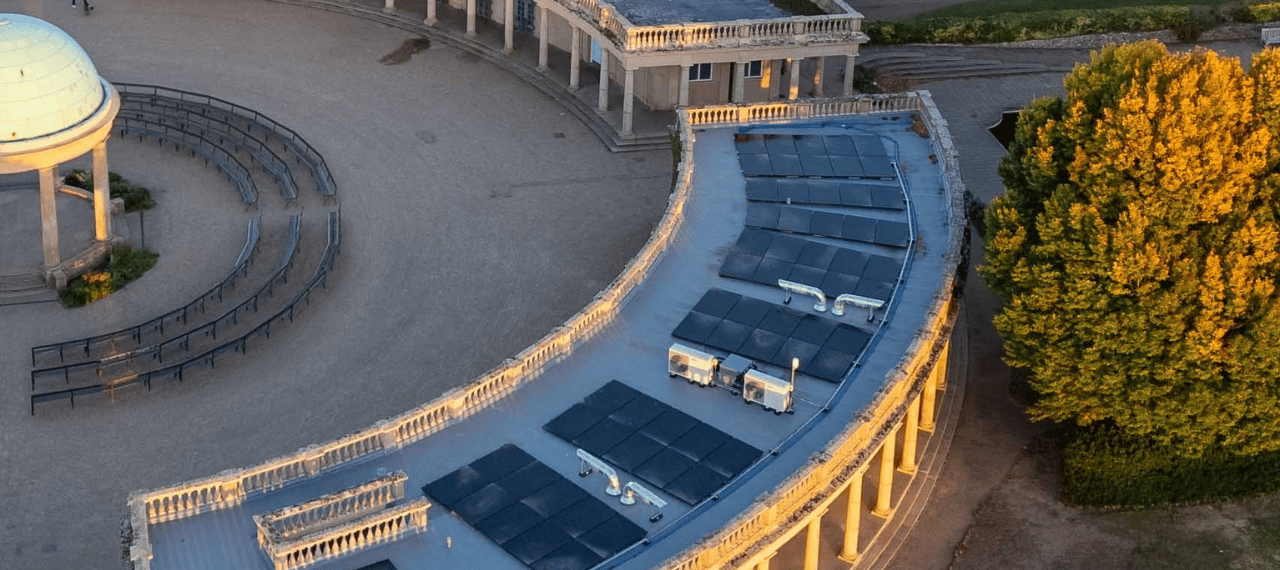
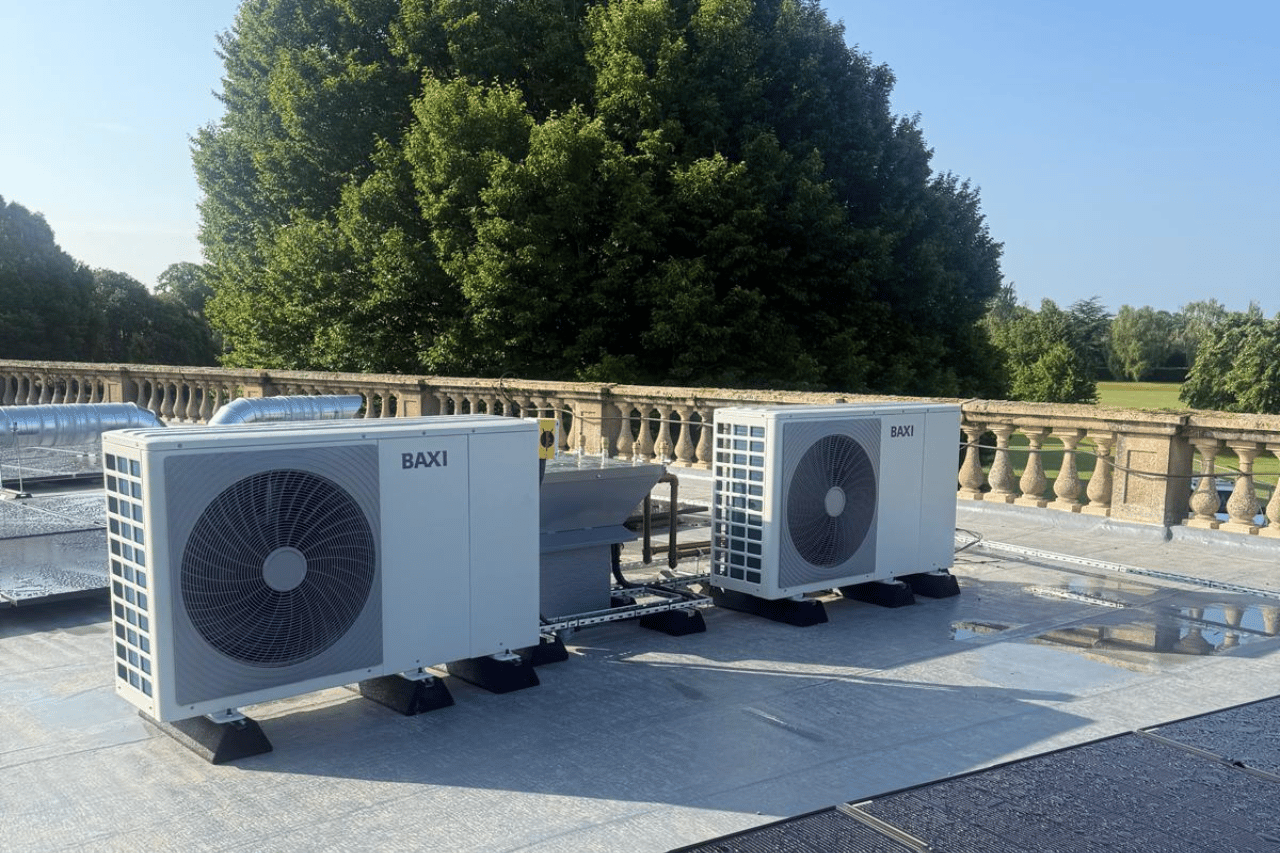
In keeping with Norwich City Council’s 2030 net zero goal for council operations (and a 2045 target for the entire city), the listed building has received a substantial decarbonisation investment with building fabric and ventilation upgrades as well as solar PV panels and battery storage. Heating and hot water at the refurbished pavilion is now provided by an all-electric solution supplied by Baxi comprising two roof-mounted Baxi HP50 13 kW air source heat pumps (ASHPs), two buffer vessels and two Baxi 300 litre ASHP cylinders.
The project was designed by M&E Consultancy JD Gray Associates Ltd, working with Chaplin Farrant Architects. Baxi provided technical and product support to help achieve a successful heating and hot water solution that meets the project requirements.

Objective
The original objective was to upgrade the existing gas heating and hot water system serving the Eaton Park Pavilion with a more efficient gas system. However, in line with the 2030 net zero target council operations, a new decision was made to move to an all-electric solution based around air source heat pumps (ASHPs).
The Pavilion, which was designed by Captain Arnold Sandys-Winch in the 1920s and opened in 1928, is arranged in quadrants around a central bandstand in the centre of the park. Classically designed and featuring symmetrical colonnades and balustrades, the Pavilion is Grade II listed.
Jonathan Gray of J D Gray Associates describes the engineering considerations when designing the solution:
“One of the factors to consider was the size and placement of the ASHPs,” he said. “Due to its heritage and distinctive architectural design, the Pavilion is frequently photographed by both cameras and drones. As the ASHPs needed to be roof-mounted, a key design parameter of the Council was to keep visibility of any kit on the roof minimal above the pavilion balustrade.”
To achieve this, Jonathan began by carrying out market research into various different ASHP units to identify the most suitable low-profile model.
“I know Baxi well and receive excellent support from my area sales manager. When researching this project, I also had a session with the Baxi technical solutions team which proved extremely useful,” he said. “Critically, the Baxi heat pump that we selected was actually a good six inches lower than the one we'd considered up to that stage. And as this was to be a packaged heat pump and hot water plant, we selected the Baxi ASHP cylinder as well.”
Technical design
The park is busy at the weekend with four football matches held consecutively at Eaton Park on both Saturdays and Sundays. Two of the matches kick off at the same time with just a brief interval before the next two matches begin. Additional matches are played during the week.
The solution therefore needed to meet high simultaneous demand for domestic hot water for the post-match showers. The challenge from an engineering perspective was designing a heat pump system capable of ensuring sufficient hot water as efficiently as possible, even on a cold winter’s day.
“Using large volume hot water storage was not an option due to plant room space limitations,” Jonathan explained. “Instead, working with Baxi’s technical solutions team, we explored different ways of using PV panels and battery storage with the heat pumps. The aim was to accumulate and store low carbon energy for use at times of peak load.
“We established that we could accommodate 66 solar panels on the roof which would be sufficient to charge two 8 kW batteries ahead of the weekend,” he continued. “The technical advice Baxi provided, and their analysis of the different schematic options was invaluable.”

The solution
The Baxi heat pump solution was specified by Jonathan and installed by P J Plumbing and Heating. Combining the ASHPs with renewable solar PV panels and batteries has resulted in a highly efficient system that successfully meets all the project requirements.
The solar PV panels generate electricity throughout the week to charge the batteries. When the batteries are full, the control divertor panel detects this and diverts the excess energy into the immersion heaters in the hot water tank.
The heat pumps then use the stored solar energy to heat water which is held in the buffer tanks. Hot water is drawn from these stored cylinders when needed. Low temperature fan convectors use the stored heat from the heat pumps to provide space heating within the Pavilion.
By prioritising solar power, the solution reduces reliance on grid electricity and lowers bills by converting surplus energy into heat.
“Accurate control and ongoing energy monitoring are critical to ensure the success of any heat pump system,” added Jonathan. “Remote access via the web allows the Council to monitor energy consumption easily and control time periods for the heating of hot water. Extension timers mean that the system can be brought on quickly if there is any out-of-hours or out-of-program use required. And of course, the ability to monitor remotely also means we can keep an eye on how the system is operating and identify potential ways of optimising performance through time-of-use tariffs.”
The solution was commissioned by Baxi’s specialist engineers to ensure optimal performance.
The outcome
For Richard Green, Project Co-ordinator in Parks and Open Spaces, Climate and Environment at NCC, the solution ticks all boxes, effectively and efficiently decarbonising the heating and hot water provision for the new inclusive facilities at Eaton Park Pavilion while bringing the Council closer to its sustainability goals.
“We were already familiar with Baxi’s boiler solutions and are extremely pleased with our all-electric heat pump heating and hot water solution at the Pavilion,” Richard said. “It’s been running issue-free for the last four months now. This is a great project that successfully meets sustainability objectives – and it looks good too!”
“Working with Jonathan, we will continue to monitor energy performance at the Pavilion closely to maximise the benefits of this system and identify the most suitable electrical tariff for us,” he concluded.
Shane Suter, Commercial Business Director at Baxi, said: “As local authorities and councils work towards tighter climate goals, decarbonising heat across their building estate and operations is a natural target to reduce their carbon footprint. Heat pumps are a proven technology, but the challenge is to strike the right balance between financial and environmental sustainability. We are proud that the technical design service and product support we provided on this project helped identify and deliver the right outcome for Norwich City Council at this iconic UK landmark.”
More about the Commercial Leisure Sector
If you would like to find out more about the work Baxi are doing in the Leisure Sector click the button below.