


Sound power vs sound pressure in heat pump design
When you’re speaking with homeowners about heat pumps, noise is rarely a technical question for them; it’s a practical one. They may ask questions like “Will I hear it in the garden?” or “Will it bother the neighbours?”.
So, before you get into system sizing or efficiency, you often end up addressing noise concerns in simple terms. This is where having a good understanding of the differences between sound power and sound pressure makes your job easier, as you’ll be able to answer the homeowner’s questions clearly and design the heat pump system correctly.
By carrying out detailed assessments and being able to present the results to your customer, you can help address some of their concerns.
Read more about:
• What are the differences between sound pressure and sound power?
• Why these matter
• Help prevent homeowner concerns before they happen
• Sound assessments and calculations
• Where support makes all the difference
What are the differences between sound pressure and sound power?
Sound pressure and sound power often get used as if they mean the same thing, but they don’t. Understanding the difference helps avoid confusion. Let’s break the two important definitions down:
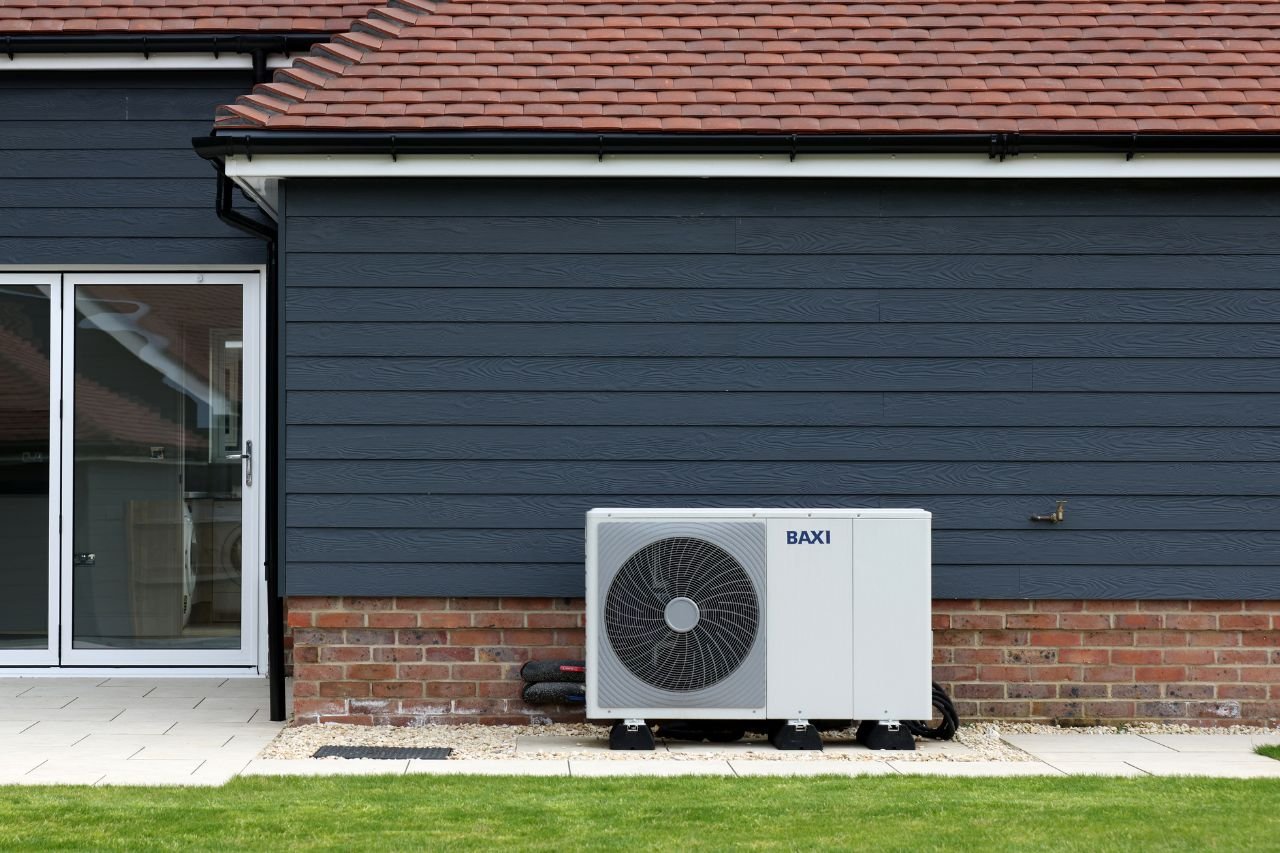
Sound pressure level: the perceived ‘loudness’ of the heat pump from a certain distance from the source of the sound. It is what people hear once the heat pump is installed and running. This changes depending on where the heat pump is sited and is affected by everything around it, such as walls, windows or distances.
Sound power level: the loudness measured at the unit itself. This will also be included on the heat pump’s ErP label. The sound power doesn’t change no matter where you install it.
Why these matter
On paper, a heat pump can look perfect. The sound power rating is within spec, the unit is “quiet” and everything checks out during selection. But once it’s installed, real world scenarios come into play. Any potential noise concerns are based on perception, and sound pressure determines this.
Think about using sound power when:
• Comparing different models
• Checking specifications
• Designing or selecting the heat pump at planning stage
• Ensuring compliance or performance requirements are met
Think about using sound pressure when:
• Deciding where a heat pump will be sited in line with MCS standards
• Working on tight properties where placement options are limited
• Fitting units near reflective surfaces like fences, walls or paving
Sound power helps you choose the right unit.
Sound pressure helps you place it in the right location.
Sound power and sound pressure are both important terms for carrying out accurate assessments and ensuring the heat pump is compliant with required MCS standards.
The Sound Power Level is used as a starting point, and the end result after following all steps should not exceed 37dB at 1m external to the centre point of any door or window to a habitable room of a neighbouring property. If it does, the installation may still be possible, but planning permission would need to be granted. Distance, barriers, number of reflecting surfaces will all have a part to play in achieving this result.
Naturally, the further away you are from a sound, the quieter that sound will be perceived. This is why it’s important to note the distinctions between sound pressure and sound power during the installation.
Placement matters for the homeowner. Understanding sound pressure helps you avoid situations where the install is technically correct and the equipment within spec but the homeowner or neighbours raise noise concerns.
Help prevent homeowner concerns before they happen
Small decisions during installation can prevent future problems such as:
• Avoiding mounting directly onto walls that carry vibration easily
• Identifying early when a location might make a unit more noticeable
• Avoid siting close to bedrooms and other quiet rooms of the property and their neighbours
• Advising the homeowner if something may be noticeable in certain conditions before finalising the design
Knowing when each one matters can make a big difference.
Sound assessments and calculations
A sound assessment is a vital part of a heat pump installation. Carried out correctly, the assessment ensures that the perceived noise of the heat pump will not cause any disruption to the homeowner or their neighbours. The calculation for a sound assessment follows the MCS 020 Standard.
Where support makes all the difference
Amongst all other aspects of planning and air source heat pump installation, having the right backup makes a difference. Our MCS Umbrella Scheme is designed to support you across the full process, not just identifying the right products, but helping you make the right calls around placement, sound considerations and overall system setup as part of the site survey.
Using our MCS Umbrella Scheme can help you feel confident that your heat pump installation is compliant with the requirements for sound, whilst also accessing government grants. You can focus on the installation and leave us to handle the design and compliance.
Our Baxi Heat Pump Installer course can give you practical knowledge you can apply straight away, enabling you to approach sound assessments with confidence. It’s all aimed at making your day to day installs smoother.
Having the right products available makes a big difference when it comes to reducing noise in real-world situations. Our range of air source heat pump solutions are designed to deliver performance, add the right support, training and products into the mix and you’re not just avoiding noise complaints you’re delivering installs that are well thought-out from the start.
To get started, or to discuss a specific ASHP project, get in touch with our team.
Heat Pump Training
Our range of courses are designed to help you improve your skills so that you can work confidently and efficiently with air source heat pumps.
MCS Umbrella Scheme
No MCS or need extra support? No problem. We’ll handle the design, paperwork and compliance, guiding you every step of the way so that you can deliver efficient, low carbon heating with confidence.