How do I talk about air source heat pumps (ASHPs) with my customers?
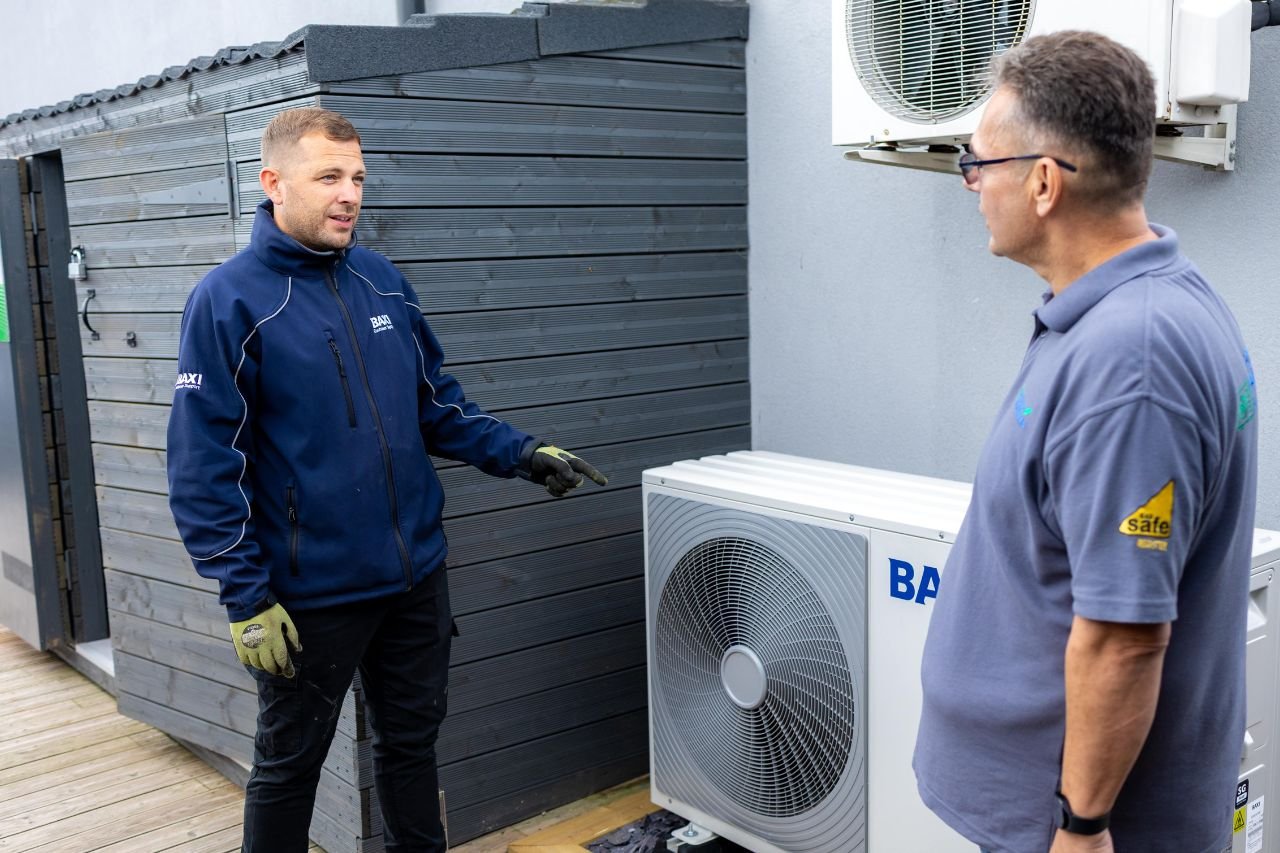
When speaking to customers looking at getting an air source heat pump installed at their property, you’ll likely have to answer some in-depth questions.
Read on to learn how you can help your customer decide if an air source heat pump is right for them and their home, with straightforward answers to some of those tricky questions.
Is the property suitable for an air source heat pump in the first place?
Air source heat pumps can be fitted at most property types. Changes to certain regulations have also made it easier to have an ASHP installed under permitted development rules. There are, however, some important considerations that installers and homeowners should both be aware of:
Sound levels
As of May 2025, the noise from an air source heat pump cannot exceed 37 decibels (dBA) when measured from the closest habitable room of a neighbour’s property. This is in accordance with the MCS 020 sound limit.
The level of sound that is recorded depends on several individual factors. Sound can ‘bounce’ off walls and appear to be greater when the unit is positioned in a certain way. At Baxi, our heat pumps are designed to be very quiet and placed at almost any location on the property, making air source heat pumps an accessible option for most homes.
Is there enough outdoor space?
The air source heat pump will need to have enough outdoor space to draw in enough ambient air to operate effectively. Updated regulations in 2025 have removed the need for the heat pump to be at least one metre from the property boundary, as had previously been the case, meaning that in essence, it is possible for a heat pump to be positioned anywhere within the perimeter of the garden.
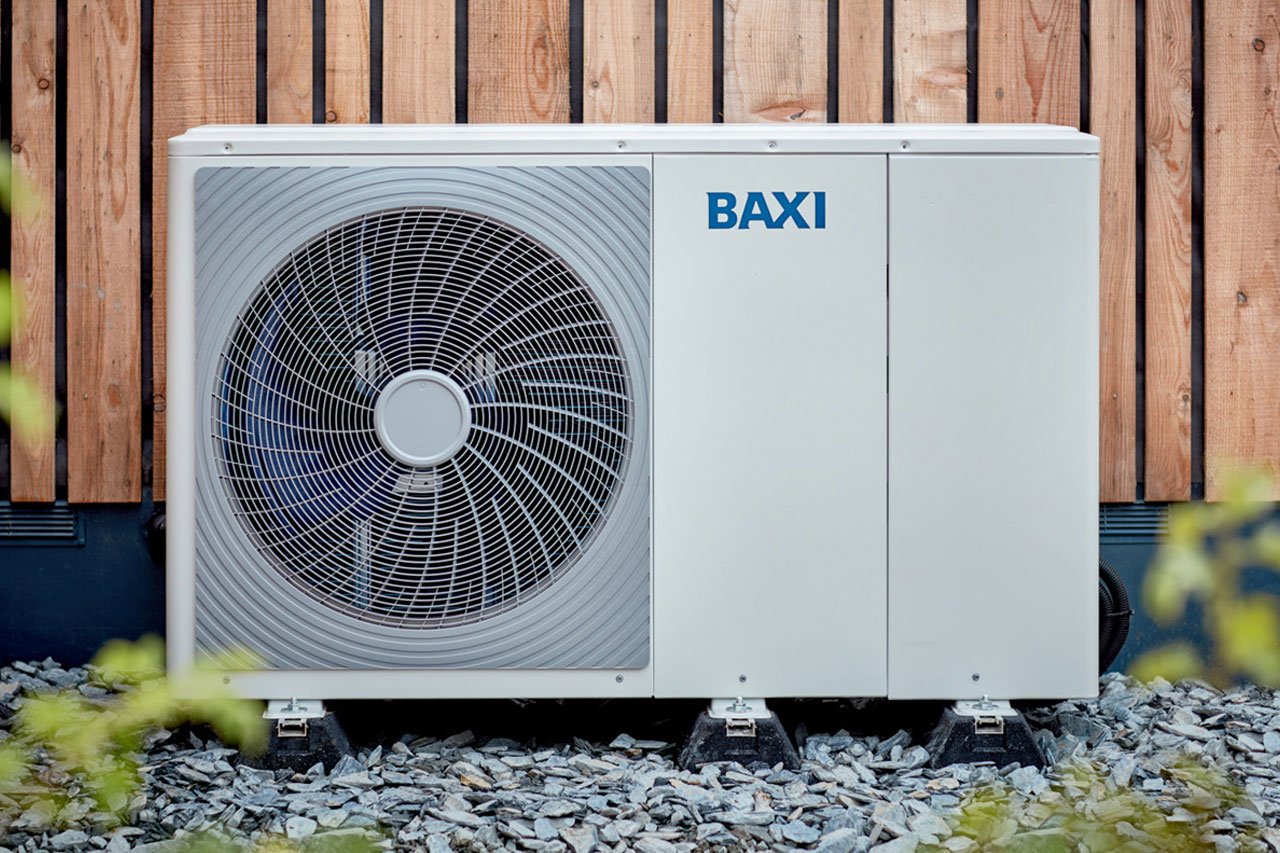
That said, it’s important that there are no obstructions in front of the heat pump, including anything being propped against it, like bicycles or garden furniture. Noise, again, will also need to be a consideration. It’s important that the installation recommendations from the installation manual are followed closely.
A stable surface
The heat pump will need to be situated on a flat, stable surface, ideally at the back or at the side of the property. This allows for suitable air flow, with the surface itself being able to support the eight of the unit without transmitting noise or vibration into the house.
It’s also advisable to have gravel underneath the heat pump for condensate to safely dissipate into to reduce the risk of a slippery floor.