


Why pipe sizing matters for air source heat pumps
Correct pipe sizing in an air source heat pump installation is essential in order to maximise the efficiency and performance of the system.
This is a critical part of system design at the early stages of planning an installation. Whilst it may not be the most visible part of an installation, pipework plays a much bigger role in ensuring the system performs as intended.
In this article, we’ll cover:
The importance of correct pipe sizing
Pipe sizing air source heat pumps compared to boilers
Signs of incorrect pipe sizing
Installation and design considerations to ensure correct pipe sizing
Support for getting pipe sizing right
The importance of correct pipe sizing
Correctly sized pipework helps ensure the heat pump can deliver the required heat output whilst maintaining the flow rate through the system. When pipework is undersized, water velocity increases, creating greater resistances. This means the circulation pump has to work harder to main the flow, increasing energy consumption and potentially reducing overall system efficiency.
Pipe sizing goes beyond just being a technical detail; it’s a vital consideration for the longevity of the entire air source heat pump system and ensures that it operates in the most efficient way.
Incorrect sizing leads to a multitude of issues, ranging from strain on components to high energy use and inefficiency. These can result in callbacks and additional work required to resolve issues that could be prevented.
Pipe sizing for air source heat pumps compared to boilers
One of the biggest adjustments when moving from boiler installations to heat pumps is understanding the difference in water flow requirements. Unlike traditional boilers, air source heat pumps operate at lower flow temperatures and rely upon moving the volume of water around the heating system much faster.
The delta T is typically wider in gas boilers, meaning that the flow rate is lower when compared to heat pumps that have a smaller delta T. Applying boiler pipe sizing principles to a heat pump installation can lead to excessive pressure drop and reduced system performance. That’s why every installation should be designed specifically for the heat pump rather than simply replicating existing boiler pipework.
In some cases, existing pipework may be suitable to stay in place, but the relevant calculations need to be undertaken to verify.
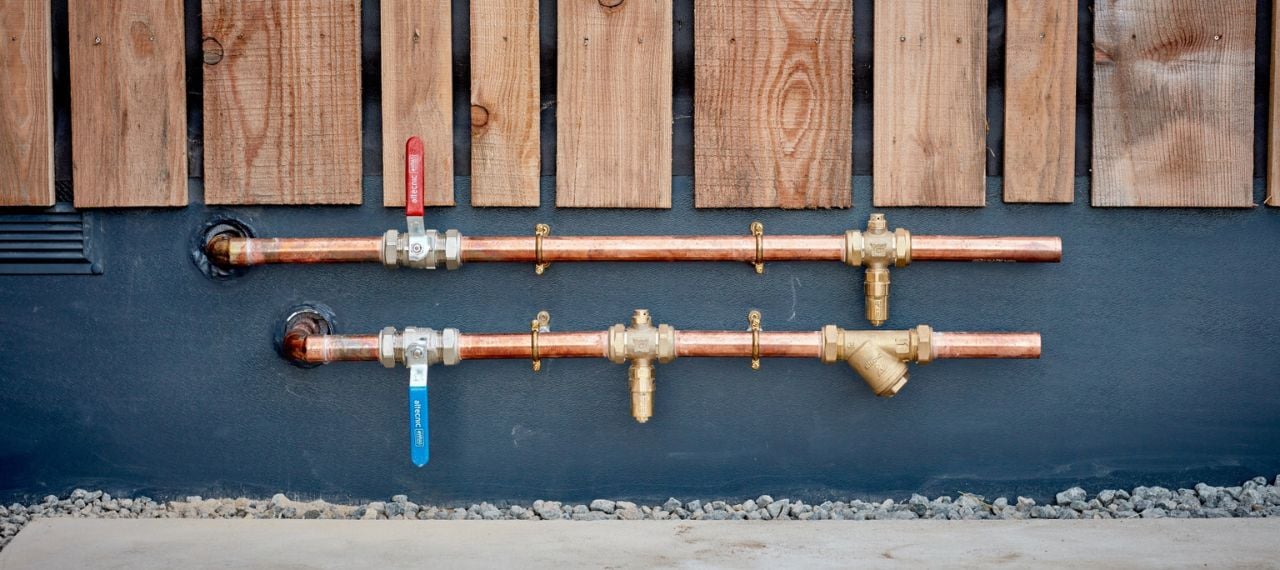
Typically, the primary pipework for most boilers will start at 22mm, whilst on a residential air source heat pump system, this would often be 28mm or 35mm in order to manage these higher flow rates and ensure pressure drop and velocity stays within the industry recommended ranges. That said, it’s important that all calculations are carried out properly to get the most accurate size.
Signs of incorrect pipe sizing
Whilst not always immediately obvious, pipe sizing issues can have an impact over time. If pipes are sized too small, the system will have poor heat delivery and still use a high amount of energy. There may also be excessive strain on the system, potentially causing increased noise, vibration or short cycling. This not only affects the performance but may also lead to the homeowner having higher energy bills.
If a system is installed with oversized pipework, this can cause unnecessary additional installation costs and reduced performance and efficiency. Lower flow velocities cause poor heat transfer throughout the system.
In situations where velocities are too low, there is a risk of pipework scaling up and corrosion due to sediment that is allowed to settle.
Larger diameter pipework will have a higher heat loss which could also lead to unnecessary energy consumption.
Correct pipework sizing is key to support the system's overall lifespan and avoid any adverse performance or strain on components.
Installation and design considerations to ensure correct pipe sizing
As the pipe size is dependant on unique factors associated with the property, the specific size you’ll need will vary with each install. This means that you’ll need to carry out a room-by-room calculation and use the figures from this to understand the flow rate requirement for each length of pipework.
You will also need to consider these factors for getting an accurate pipe size measurement:
The load of the heat emitters connected to each pipe
The Delta T of the flow and return temperatures
The pipe material and its technical properties
The maximum design velocity (typically a maximum of 1 - 1.5m/s according to MCS and CIBSE recommendations)
The maximum allowable pressure drop per metre (typically a maximum of 350 pa/m according to CIBSE recommendations)
Support for getting pipe sizing right
Every heat pump installation is different, which is why access to the right support and information can make a big difference to your business. There are various resources available to help you with understanding air source heat pump pipe sizing. Whether you’re new to heat pumps, or an experienced installer, having expert guidance can help ensure that installations are designed correctly with the right size pipework from the start.
We’re here to support you at every step with access to dedicated technical experts helping you find the right solutions for your job. Our MCS Umbrella Scheme can provide you with straightforward compliant designs following an on-site survey by one of our experienced network of ASHP engineers. You can focus on the installation and we’ll handle the design and MCS paperwork.
At Baxi, our training courses are designed to build confidence across every stage of heat pump design, installation, commissioning, servicing and maintenance.
Whether you’re looking for technical guidance, MCS support or to grow your ASHP expertise, we can provide the support and services to help you deliver successful installations.
MCS Umbrella Scheme
No MCS or need extra support? No problem. We’ll handle the design, paperwork and compliance, guiding you every step of the way so that you can deliver efficient, low carbon heating with confidence.
Baxi Training
Discover our comprehensive range of courses and videos designed to enhance your skills and knowledge.