Commercial air source heat pump retrofitting: a step-by-step guide
There’s little doubt that air source heat pumps (ASHPs) are seen as a strong alternative to traditional boilers as we move towards low-carbon methods of heating.
Retrofitting a heat pump – in other words, installing one to replace or supplement an existing system – provides commercial building managers with an opportunity to lower emissions and upgrade the system for the future.
This step-by-step guide will take you through the process of retrofitting an ASHP in a commercial building and the considerations to have in mind before, during, and after the installation is complete.
We will look at:
What you need to consider before starting an ASHP retrofit
The process for retrofitting a commercial air source heat pump
Grants for commercial heat pump retrofitting
What happens after a heat pump retrofit?
Grants for commercial heat pump retrofitting
Retrofitting an air source heat pump with Baxi
What you need to consider before starting an ASHP retrofit
While it’s possible to retrofit an air source heat pump in most buildings, a successful outcome will depend on its unique characteristics and other factors. Existing systems may have been designed for high-temperature boiler operation and therefore may need extensive modifications for a retrofit system. There may also be a requirement for emitter upgrades to accommodate lower flow temperatures.
System operating temperatures should be carefully assessed during the design stage, as lower flow temperatures can significantly improve heat pump efficiency and overall system performance.
These, amongst others, are some of the key decisions to weigh up.
Take a look at what you should have in mind when considering an ASHP retrofit in this video:
Explore hybrid systems
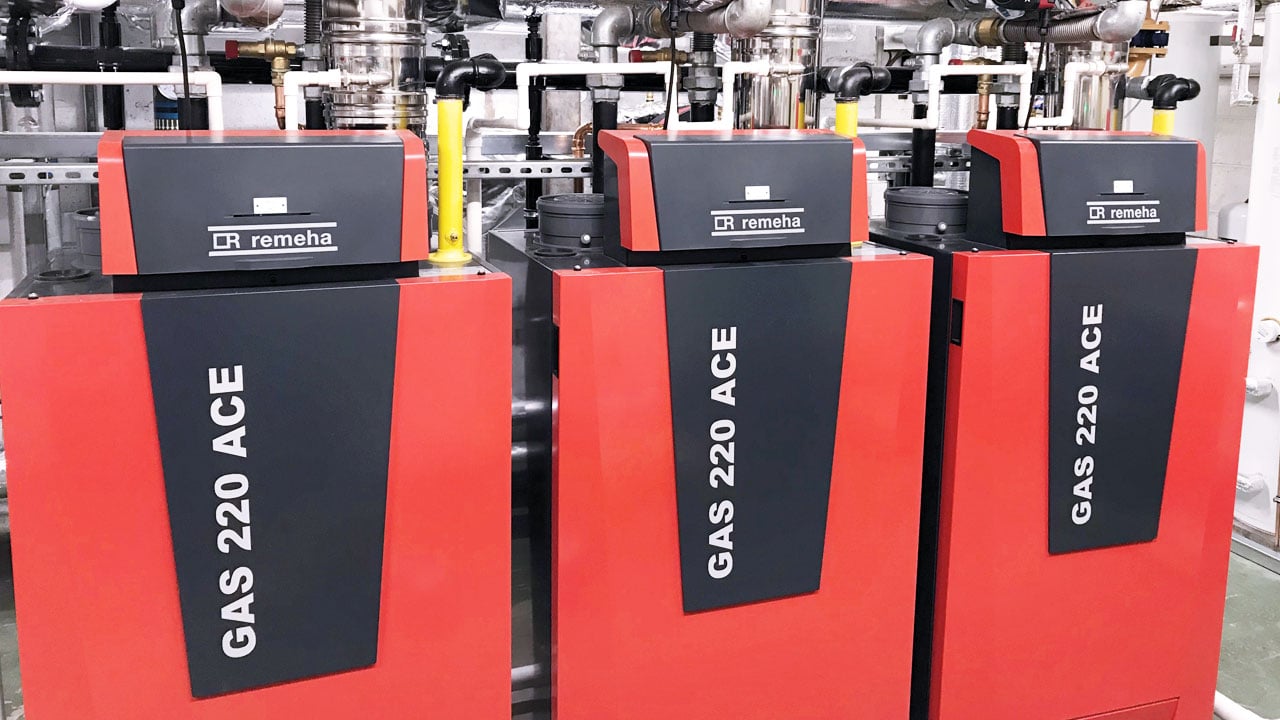
A hybrid system combines the heat pump with a traditional heating method, such as a boiler. Retrofitting a hybrid system maintains its efficiency and effectiveness, particularly in buildings that may have more complex requirements.
Using a hybrid system supports a phased approach to decarbonising heating systems. For commercial property managers, this represents a chance to explore the benefits of using low carbon technologies such as an air source heat pump, while still using the existing system during the transition.
The process for retrofitting a commercial air source heat pump
Let’s look at the steps for retrofitting an ASHP in more detail:
Initial feasibility assessment
This first stage assesses the viability of a heat pump system at a commercial building from both a technical and financial view. Potential physical restrictions of the site, including plant room and electrical constraints, are taken into account and factored into the later stages of the process as we’ll come onto.
System design
The design stage, beginning after the completion of the initial feasibility study, ensures that your new heat pump is the right type, size, and model to meet the necessary demands. Data from the heat loss calculation worked out in the feasibility assessment will be used to ensure the heat pump works efficiently and ascertains whether further modifications, such as insulation improvements or structural enhancements, will be needed.
This stage also helps identify where the heat pump will likely be situated at the building or estate, factoring in pipework, airflow, and safety.
The assessment should also identify any domestic hot water (DHW) requirements, as these may influence system sizing, operating temperatures and the selection of complementary low-carbon technologies.
The system design should also assess hydraulic separation, buffer capacity, circulation requirements and the suitability of existing distribution networks to ensure the heat pump can operate reliably and efficiently within the existing heating system.
Electrical and infrastructure upgrades
In some cases, there may be a need to make upgrades to certain electrical systems to handle increased electrical loads, such as cabling and distribution boards. Liaising with the Distribution Network Operator (DNO) and gaining subsequent approval will also be needed in these instances.
Specific wiring will be needed to connect the outdoor heat pump unit with the internal controls and technologies.
Siting and installation
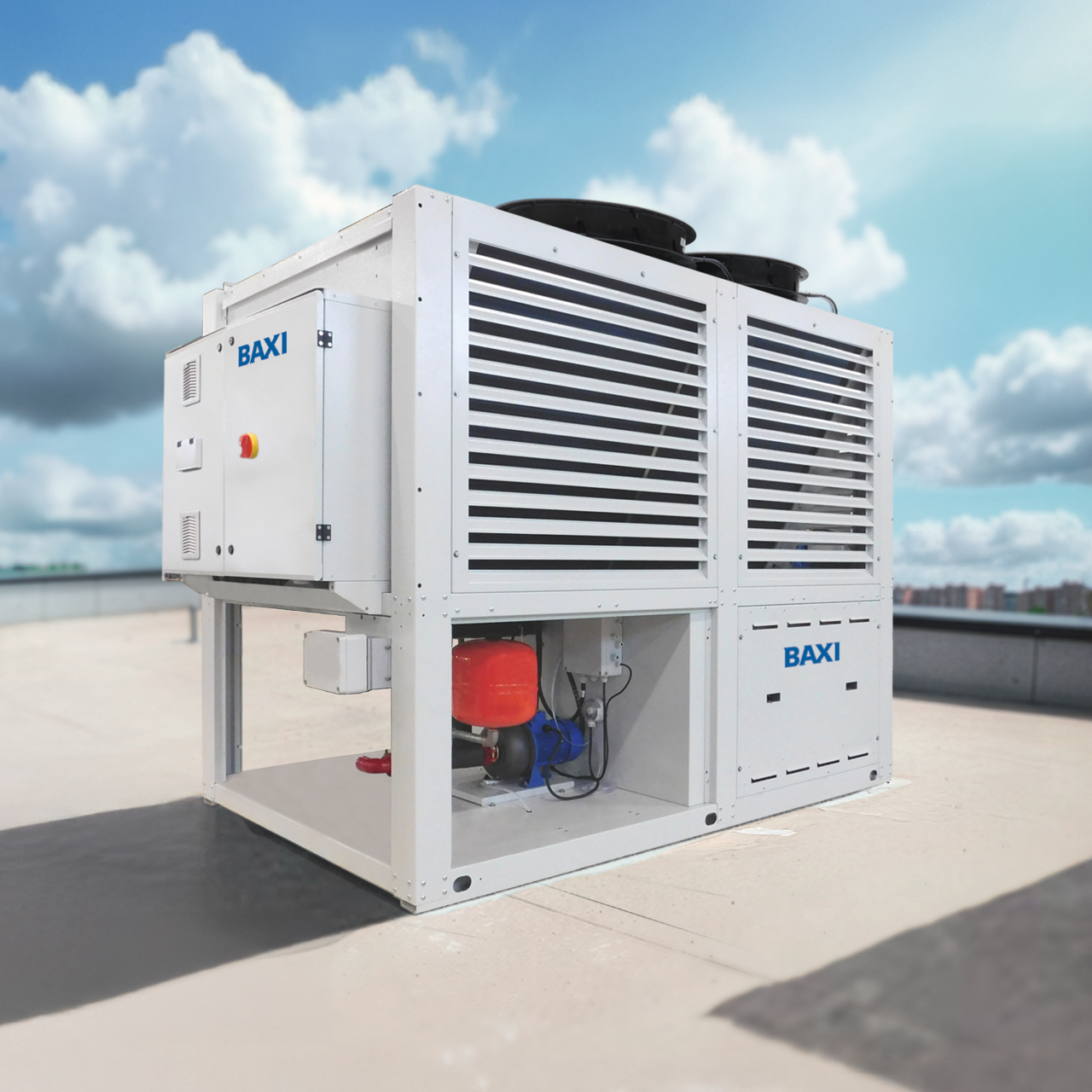
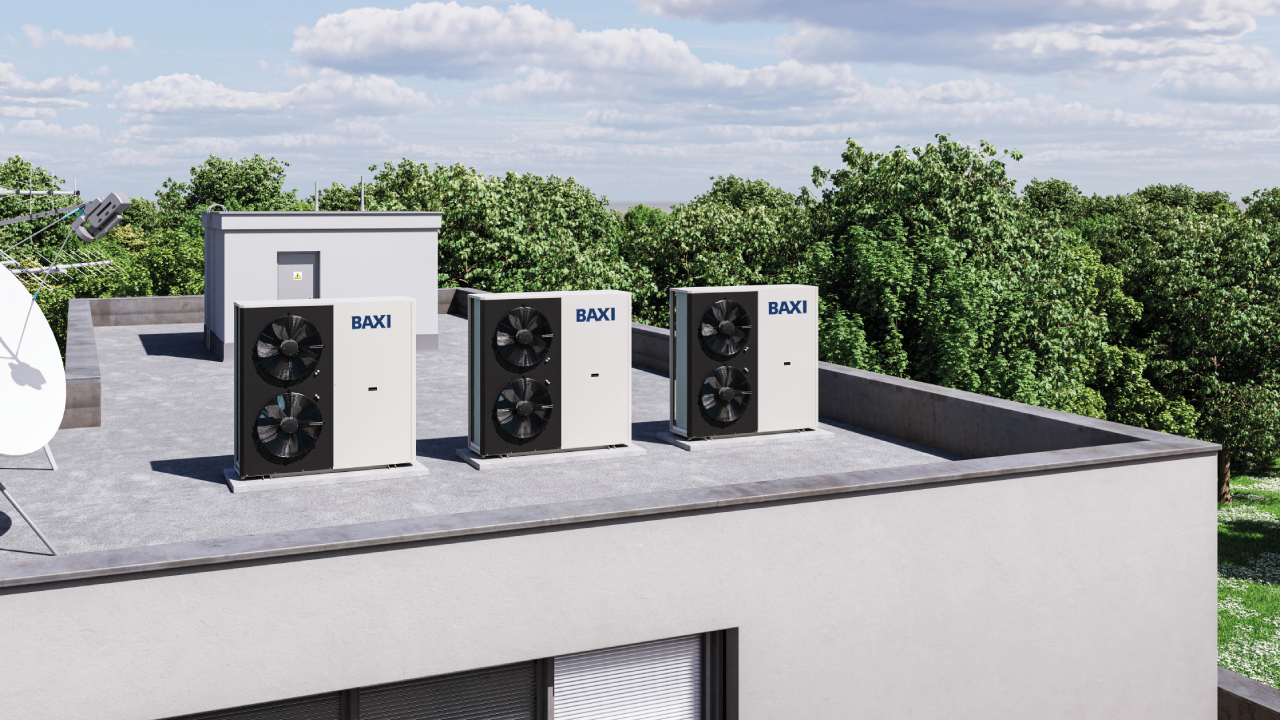
Correct siting is crucial for commercial air source heat pump retrofitting. The outdoor unit will need to be positioned in a location that allows for good airflow and access for maintenance. In most commercial heat pump installations, including a retrofit, the outdoor unit is either roof-mounted or at ground level near to the building, therefore there are safety factors to keep in mind, too.
Depending on the project, planning permission may be required, as permitted development rules that exist for domestic properties do not necessarily extend to commercial buildings. Planning permission will also likely be required for listed buildings or those within natural areas.
Whilst heat pumps are largely quiet units, they aren’t silent. The correct siting and installation will keep noise disruption to a minimum while also ensuring effectiveness.
Commissioning and handover
Once installed, the system should be fully commissioned to verify flow rates, temperatures, controls integration and operational performance. Building operators should receive training on the system and controls.
Controls and settings
A commercial heat pump is designed to provide a consistent performance, with smart controls making all the necessary adjustments without you having to do anything. Smart controls automatically respond to demand and environmental conditions, so the heat pump continues to work in the most effective and efficient way.
The heat pump controls should integrate with any existing Building Management System (BMS) where appropriate.

Grants for commercial heat pump retrofitting
Certain commercial projects may be eligible for support through schemes such as the Boiler Upgrade Scheme (BUS), subject to current eligibility criteria. Businesses should check the latest government guidance and explore other regional or sector-specific funding opportunities.
What happens after a heat pump retrofit?
Retrofitting a commercial air source heat pump goes beyond the unit being installed. Inspecting the refrigerant levels, filters, and other key components is essential for ensuring system longevity and a continuously high level of performance.
A commercial air source heat pump should have a service at least annually. This will be where many of the checks mentioned above take place, identifying any areas of concern early and make adjustments to improve efficiency.
Monitoring the various systems also helps keep track of maintenance plans and ultimately manage costs.
Retrofitting an air source heat pump with Baxi
Having a commercial heat pump retrofitted in an existing building delivers flexibility, efficiency, and the potential for long-term cost effectiveness. If you’re ready to take the first step, we’re here to get you started.
Integrated Solutions
Our portfolio includes some of the best-known and most-respected brands in the industry.
Commercial Solutions
If you're looking to install high performing, renewable energy solutions for heating or indirect hot water production, our air source heat pumps are the efficient choice for newbuild and retrofit commercial applications.