Building solutions for decarbonisation
Heat in buildings accounts for nearly a quarter of total UK carbon emissions, so working with building owners and managers now to identify the achievable options is crucial if we are to achieve 2050 net zero.
Ryan Kirkwood, Engineering Solutions Manager at Baxi, discusses the value of building solutions to break down the complexities associated with decarbonising heat.
Heating systems are big energy users in existing commercial buildings. Replacing boilers with heat pumps provides an opportunity to improve building energy performance, increase energy efficiency and reduce carbon emissions, but it can be a complex process. This is because older systems typically operate at flow and return temperatures of 82/71°C or potentially 80/60°C, with the emitters sized accordingly.
The cost to upgrade, available budget, time, space and electrical capacity, as well as running costs, are just some of the typical refurbishment challenges. And as each building will have its own unique requirements, there can be no one size fits all solution. Successfully replacing boilers with air source heat pumps therefore requires a detailed and methodical process to ensure optimal performance and deliver energy savings.
Understanding the existing heating system
Having a full understanding of the existing heating system and real measured data from the building is essential to achieving optimal outcomes. Using this information, experienced manufacturers like Baxi will be able to engineer a series of solutions, simulating the energy, carbon and CAPEX impact of each option and building upon them to improve the outcomes within the project parameters.
What do we mean by this? Let’s consider an example where an existing building heating system includes gas boilers operating at 82/71°C, with a 300kW constant temperature (CT) distribution system that includes a DHW calorifier and a 100kW variable temperature (VT) distribution system, indirectly weather compensated. Both run at the same 82/71°C boiler flow temperature. Cost and operating limitations rule out replacing emitters in the CT system, however the VT circuit emitters could be replaced to allow a lower flow temperature.
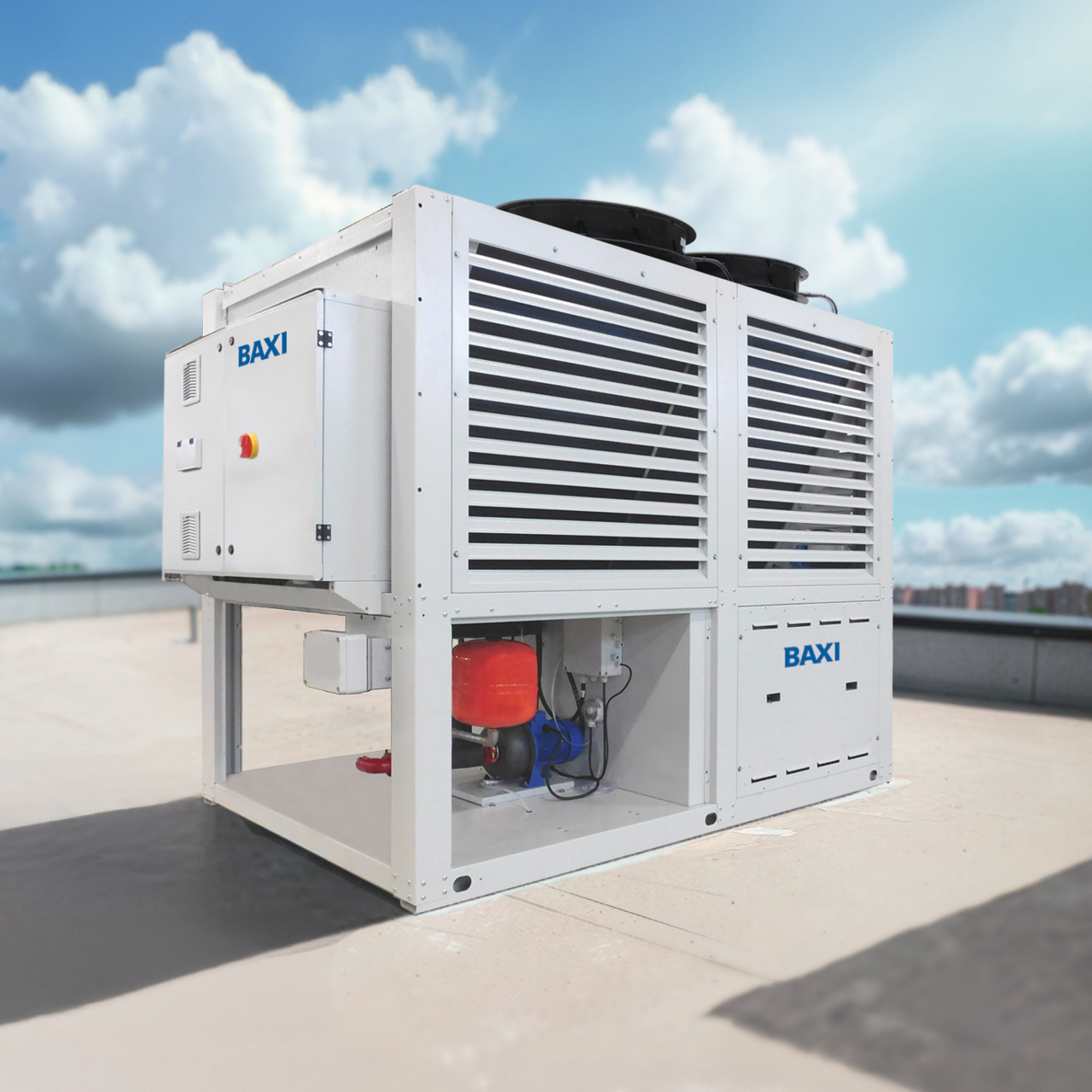
One approach to decarbonising this example heating system could begin with replacing the existing gas boilers with high-temperature heat pumps (HT HPs), such as the Baxi Auriga HP+, on a kW-for-kW basis. This would maintain the 82/71°C operating temperature year-round, with minimal modifications to the existing circuits. However, while this method is relatively straightforward, it involves high capital costs and would push the HT HPs to their performance limits.

Contact your TSM
Get in touch with your Technical Sales Manager.